How to choose a rudraksha mala
Mukhi count, bead size, and knotting matter more than a pretty photo. A short checklist before you buy a japa mala.
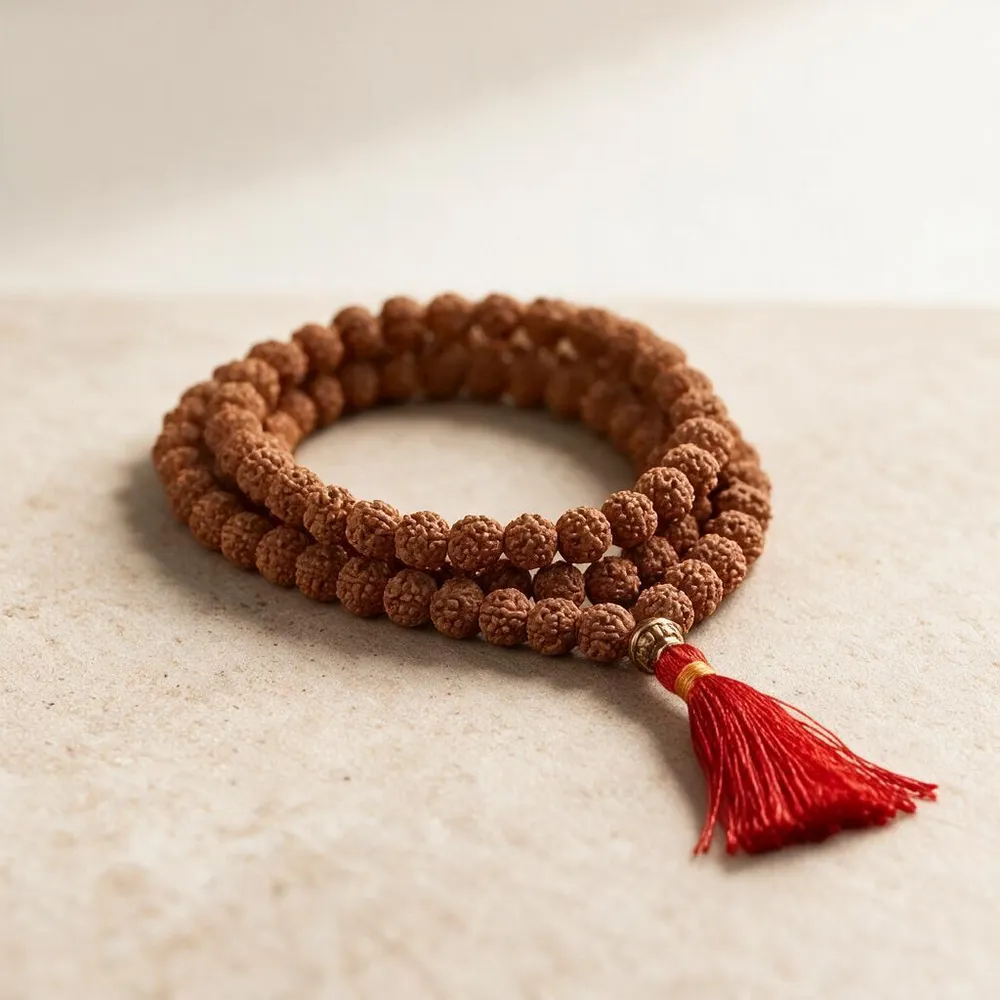
A rudraksha mala is a counting tool for japa. The bead you repeat on should feel steady in the hand, and the strand should survive daily use.
Start with the mukhi
Mukhi is the number of faces on the bead. Five-mukhi is the most common for daily japa. Other counts are chosen for a specific practice, so buy the count your teacher or tradition names, not the one with the loudest claim.
Check the strand, not just one bead
- Beads should be similar in size so the mala sits evenly.
- A knot between beads keeps the strand from wearing at the holes.
- The guru bead, the larger bead you do not cross, should be easy to feel with the thumb.
Ask before you pay
Ask whether the beads are Nepali or Indonesian, the mukhi count, and whether the holes were drilled through natural seeds. A clear answer is more useful than a certificate you cannot read.
Hold the mala if you can. It should not smell of varnish, and the thread should not fray at the tassel.
Looking for a piece to practice with? Browse the shop.